A chart is not a likeness of a thing, but a promise about it. Whoever draws a chart says: this far my attention reaches, and not one step further. This one reaches from the Three Sisters in the Rätikon over the ancestral house on the Herrengasse down to a hundred-year-old oak on a Vorarlberg hillside. What lies outside this circle belongs to other houses.
At the centre: Herrengasse 30, nine hundred and ninety metres below Vaduz Castle, in a burgher's house with green shutters and a hipped roof. This is where I sit on the days I am not sitting in Singapore. The postal address is c/o Equanimity AG; the door is a wooden door with a tin plate that bears the number 30.
To the north — The Rätikon. The Three Sisters, visible from the office on the opposite side of the valley. They remind one every morning that a person who looks at a line long enough eventually becomes a line himself.
To the north-east — The apprenticeship. The paint shop of the Liebherr works in Nenzing, where from 2005 to 2008 I learned that a surface must be primed twice before it is truly primed. A lesson that holds in Excel tables as it does in steel construction.
To the south-east — The logbook. The bound notebook in which I keep dated, anonymised notes from the work. A third of them appear here, in chapter two. The other two-thirds remain where they belong: between me and the patriarchs.
To the south — Office hours. An armchair, a glass of water, a blank notepad. The few hours in the week when I am reachable by telephone, and the individual appointments in which I sit at your kitchen table.
To the south-west — The harbour. Lake Constance, eastward from Bregenz. A small wooden boat at a stone mole. It is not mine, but I visit it often enough to count the stone at the landing as an acquaintance.
To the north-west — The stone. An oak on a Vorarlberg meadow, with a low dry-stone wall in the foreground. It is a hundred years old, perhaps two hundred. Whoever tends it does not think in quarters. That is the only form of asset management I offer.

A seventh point, not marked on the plate — Arosa
North-east of the chart, where it ends, the Schanfigg valley begins. At 1 800 metres lies Arosa — that small, unassuming high-alpine place to which German-speaking families go when they want neither St. Moritz nor Davos. In winter, for the security. In summer, because almost no one is left. Perhaps you know the Tschuggen Grand or the Kulm. Perhaps you spend one or two weeks a year there. If that is so, then I come to you — by rail from St. Margrethen via Chur, two and a half hours from Vaduz. An office hour in the chair of the hotel library counts for more than three telephone calls.
And there is in Arosa — this should not go unsaid — Anna Jelen. Anna is not, as a rule, available to speak. She is expensive and hard to reach, and that is as it should be. But if you have sat with her for an hour in a room, the world will be a different one — not because the world will have changed, but because Anna is one of the few people who can still a person. We know her. When it fits, we make the introduction — a fuller introduction lies in harbour.
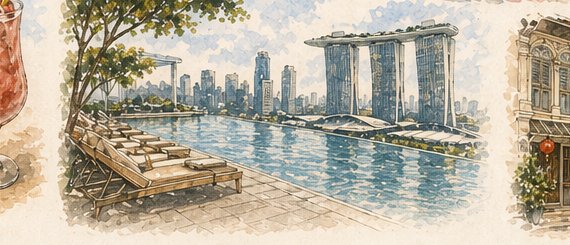
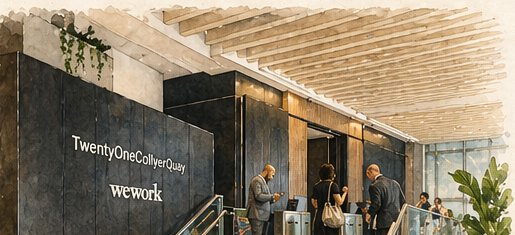
A second berth — Singapore
If this chart pleases you, then continue on the next page — there it stands how one reaches this house.